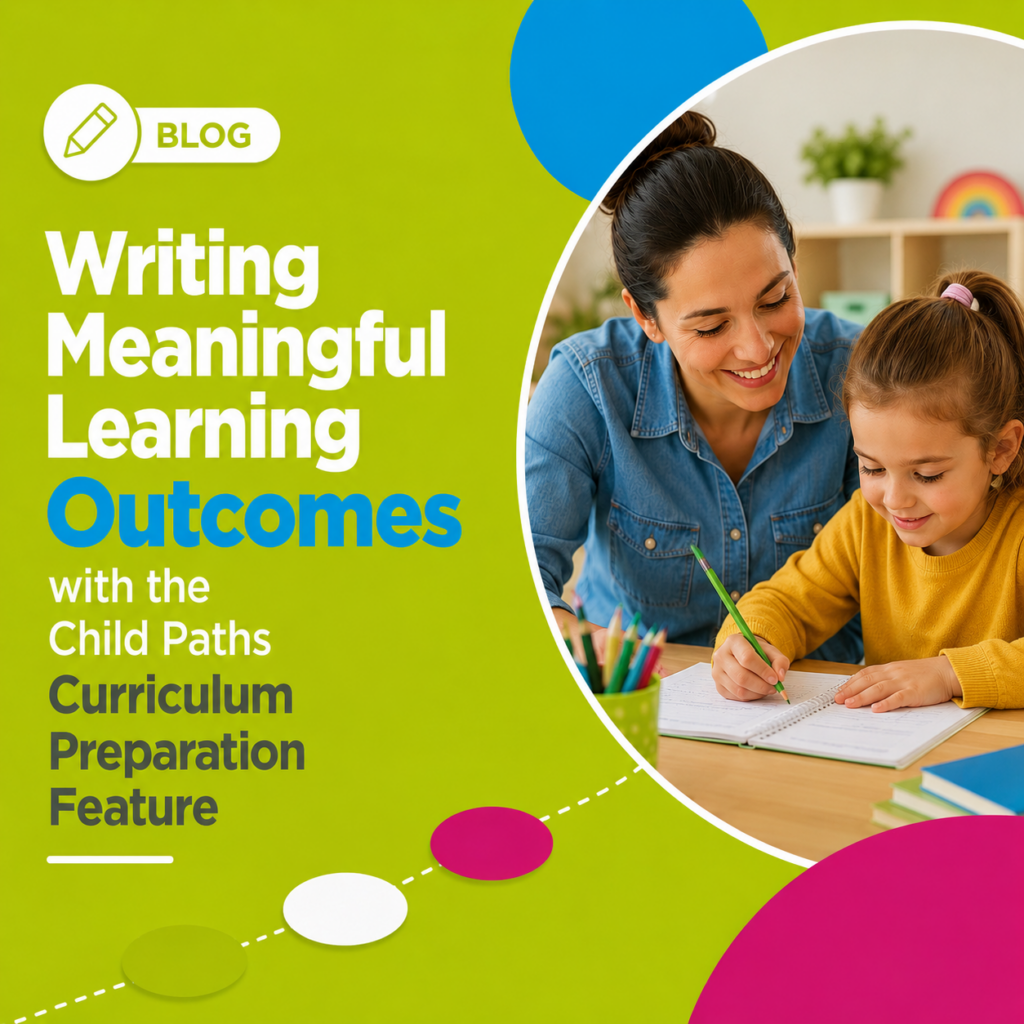
As curriculum planning becomes increasingly reflective and child-centred within Early Childhood Education and Care (ECEC), writing meaningful learning outcomes is an important part of the planning process. The new Curriculum Preparation feature within Child Paths supports educators in developing learning outcomes that are responsive, realistic, and connected to children’s prior learning and emerging interests.
According to the National Council for Curriculum and Assessment (NCCA), learning outcomes describe the knowledge, understanding, skills, and values children should be able to demonstrate after a period of learning. Importantly, they are not simply activity goals. Instead, they focus on children’s developing concepts, dispositions, skills, and attitudes across a range of contexts.
So, how can educators write meaningful learning outcomes?
1. Start with the child
The Child Paths Curriculum Preparation feature encourages educators to reflect on children’s existing knowledge, interests, and experiences before planning. Using observations, previous curriculum plans, and learning records helps educators identify realistic and relevant next steps for learning.
2. Focus on learning, not activities
Rather than writing outcomes based on what children will do, focus on what children may learn, understand, explore, or develop. For example:
- Instead of: Children will paint autumn trees
- Consider: Children will explore colour, texture, and seasonal change through creative expression.
This shift supports deeper and more transferable learning.
3. Think holistically
Learning outcomes should reflect the whole child. Effective outcomes often combine concepts, skills, dispositions, wellbeing, communication, creativity, and relationships rather than focusing on isolated knowledge.
4. Allow flexibility
The NCCA reminds educators that all children learn differently and that learning journeys will vary across contexts. The Child Paths feature supports this by allowing educators to revisit and adapt outcomes as children’s interests evolve over time.
5. Connect outcomes to everyday practice
Meaningful learning outcomes become visible through play, routines, interactions, conversations, and experiences. The Curriculum Preparation feature supports educators in linking learning outcomes with assessment practices, previous planning, and future curriculum decisions.
Ultimately, writing learning outcomes is not about predicting exactly what children will achieve. It is about thoughtfully identifying possibilities for learning while remaining responsive to children’s voices, interests, and developing identities.
References
National Council for Curriculum and Assessment (2019) Learning Outcomes: A Guide for Practitioners. Dublin: NCCA.
National Council for Curriculum and Assessment (2020) Preparation for Teaching and Learning: Guidance for Primary and Early Years Educators. Dublin: NCCA.